The newest frontier in our environment work: growing industrial crops on coal discard, running regenerative farming on rehabilitated land, and measuring the carbon all of it banks.
2023 to 2026Programme years
NWU, UPLead universities
Kenaf on discardM. le Roux, North-West University
Carbon farming modelIn the 2025/26 portfolio
2 models
carbon farming, and regenerative crop and livestock
1 fibre crop
kenaf, grown in coal discard
6 grass species
screened for biomass on treated discard
2026
carbon farming enters the live research portfolio
01
The problem
Land without a next chapter
Rehabilitated mine land too often ends as low-grade grazing or nothing at all, while discard dumps sit as permanent scars. Meanwhile the industry needs measurable carbon sinks and the coalfield towns need post-mining livelihoods. The pieces were lying next to each other, waiting to be assembled.
“Potential on carbon capture, emissions and footprint reduction of regenerative post-closure agricultural land use of coal mines.”
The study title in our 2023/24 Annual Report. The whole strategy in one line.
02
The research
Grow value where the mine was
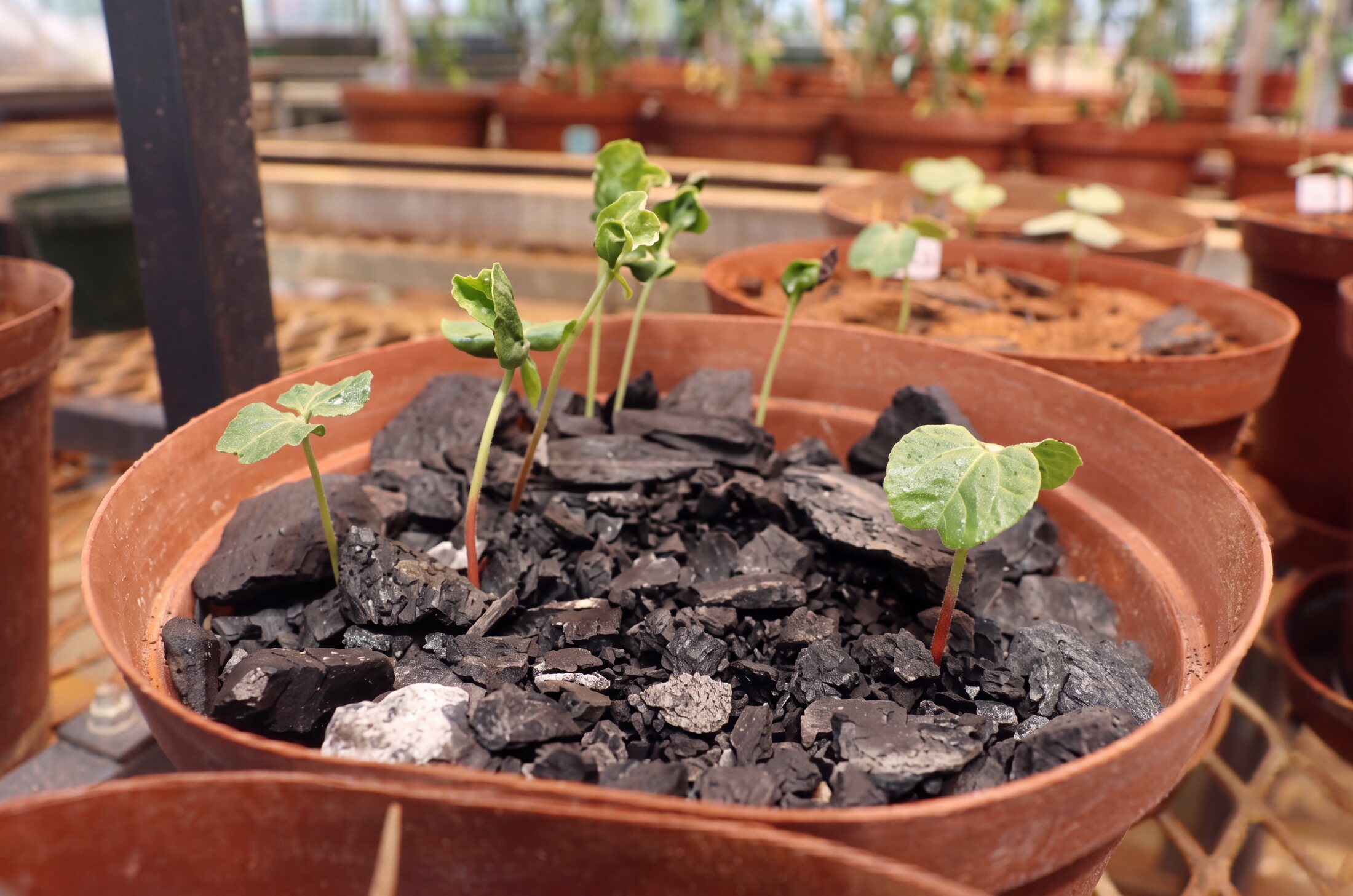
Marco le Roux’s team at North-West University put kenaf, a fast-growing industrial fibre crop, into coal discard and watched it take. The regenerative agriculture study modelled carbon capture, emissions and footprint reduction from regenerative post-closure farming on coal mine land, crop and livestock together, soil organic carbon counted. Grass species were screened for biomass on treated discard. And in the 2025/26 portfolio the threads formalised into two models: carbon farming, and regenerative crop and livestock, alongside micro-algal carbon capture.
Prof M. le Roux
North-West University. Kenaf on coal discard.
Prof W. Truter and Dr E. Cele
University of Pretoria. The carbon farming model, E2023-1.
A. van Zyl, Terrasim
With Cirrus Group: regenerative carbon and footprint modelling.
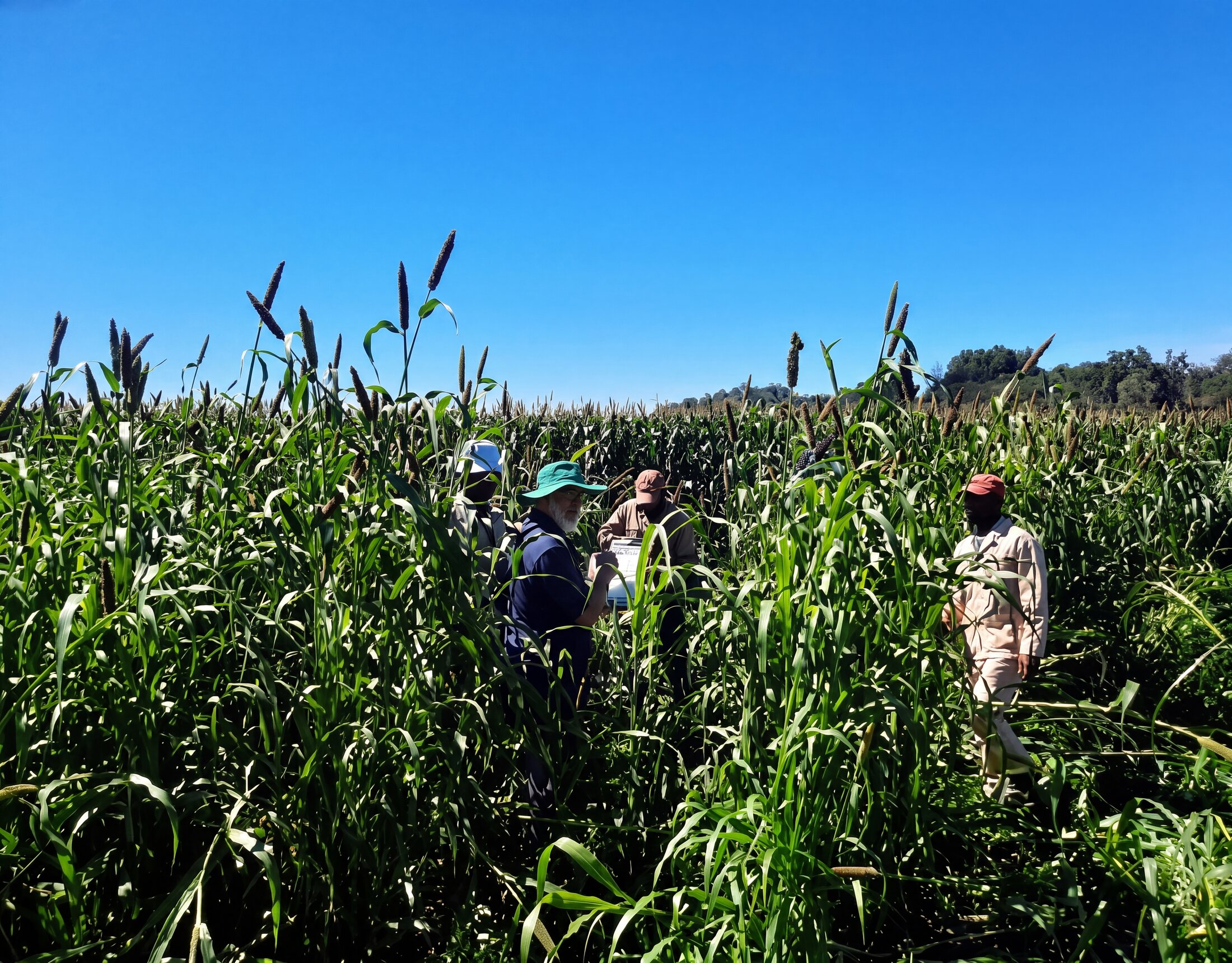
Kenaf seedlings growing in coal discard.The crop at height in the field trials. From our 2024/25 Annual Report.
2 models
carbon farming, and regenerative crop and livestock, now in the live portfolio. The land gets a next chapter.
03
The impact
A working landscape, with the carbon counted
Cattle grazing regenerated pasture where mining finished: that photograph is the industry’s social licence in one frame. The kenaf work points at fibre crops that grow in the waste itself. The regenerative modelling puts numbers on soil carbon, which connects this land directly to the sector’s emissions ledger. Rehabilitation used to end at revegetation. It now ends at a farm gate with a carbon account.
2023
The threads
Regenerative post-closure agriculture and carbon studies begin.
2024
Kenaf takes
Le Roux’s trials grow kenaf in coal discard at NWU.
2025
Species screened
Grasses screened for biomass on treated discard; trials mature.
2025/26
The models
Carbon farming and regenerative crop and livestock enter the portfolio.
The evidence. Every claim traces to a published report.
PDFKenaf on coal tailings, final report (Boshoff, CWEC)What this report showsThe fibre crop grown in coal discard, documented.2025Open in the Library →
PDFCarbon farming model for rehabilitated coal mined land, E2023-1What this report showsTruter, Cele and van Zyl, University of Pretoria, May 2026: the model for land and community regeneration.2026Open in the Library →
PDFRegenerative post-closure agricultural land use carbon study, E2023-3What this report showsVan Zyl, Christie and Knowles: cropland, pasture, integrated livestock and agroforestry systems assessed for carbon.2024Open in the Library →
PDFDiscard dump rehabilitation using industrial plantsWhat this report showsIndustrial cropping on discard, assessed.2025Open in the Library →
PDFIntegrated Annual Report 2025/26, future portfolioWhat this report showsCarbon farming and regenerative models in the live programme.2026Open in the Library →
In the news
The kenaf work has crossed from field trial into the peer reviewed literature.
This is where rehabilitation, water and the emissions baseline converge on the same hectare. Related: Farming with Mine Water. The Emissions Baseline. Living Soils.