07
CASE STUDY 07 · INTEGRATED MINING AND PROCESSING
The fire that needs no spark
Coal can set itself alight. For twenty years we funded the science of spontaneous combustion, from measuring what burning dumps emit to the practical guidelines opencast mines now run on.
20 years
from first emission measurements to the 2025 guidelines
2 guidelines
best practice in 2011, practical management in 2025
1 record
the thermal history of the Witbank coalfield, collated
24/7
the hazard never clocks off, so the doctrine cannot either
01
The problem
It starts while nobody watches
Stockpiled coal and discard oxidise. Oxidation makes heat. Enough heat and the dump ignites itself, no spark required. A burning dump is a safety hazard, an emissions source and a rehabilitation blocker at once, and the Witbank coalfield carries a century of them, many on collieries whose owners are long gone. What the industry had was inherited craft knowledge. What it needed was doctrine.
“Practical guidelines for the management of spontaneous combustion in opencast coal mines.”
Project M2024, G. Stenzel, published March 2025
02
The research
Measure it, map it, write it down
The work built in layers across twenty years. Emissions from spontaneous combustion were characterised in 2005, so the industry knew what a burning dump actually puts into the air. The thermal imagery of the Witbank coalfield was collated in 2008, a heat map of the legacy. The 2011 best practice guidelines set the first doctrine for surface mines. The modern arc added new study methodology, tested antioxidants as suppressants of self-heating, flew thermal surveys over discard facilities, and closed in March 2025 with Gideon Stenzel’s practical management guidelines for opencast mines.
G. Stenzel
Author of the 2025 practical guidelines.
CSIR specialists
Emission characterisation, thermal imagery.
Member opencast mines
Where the doctrine was tested.
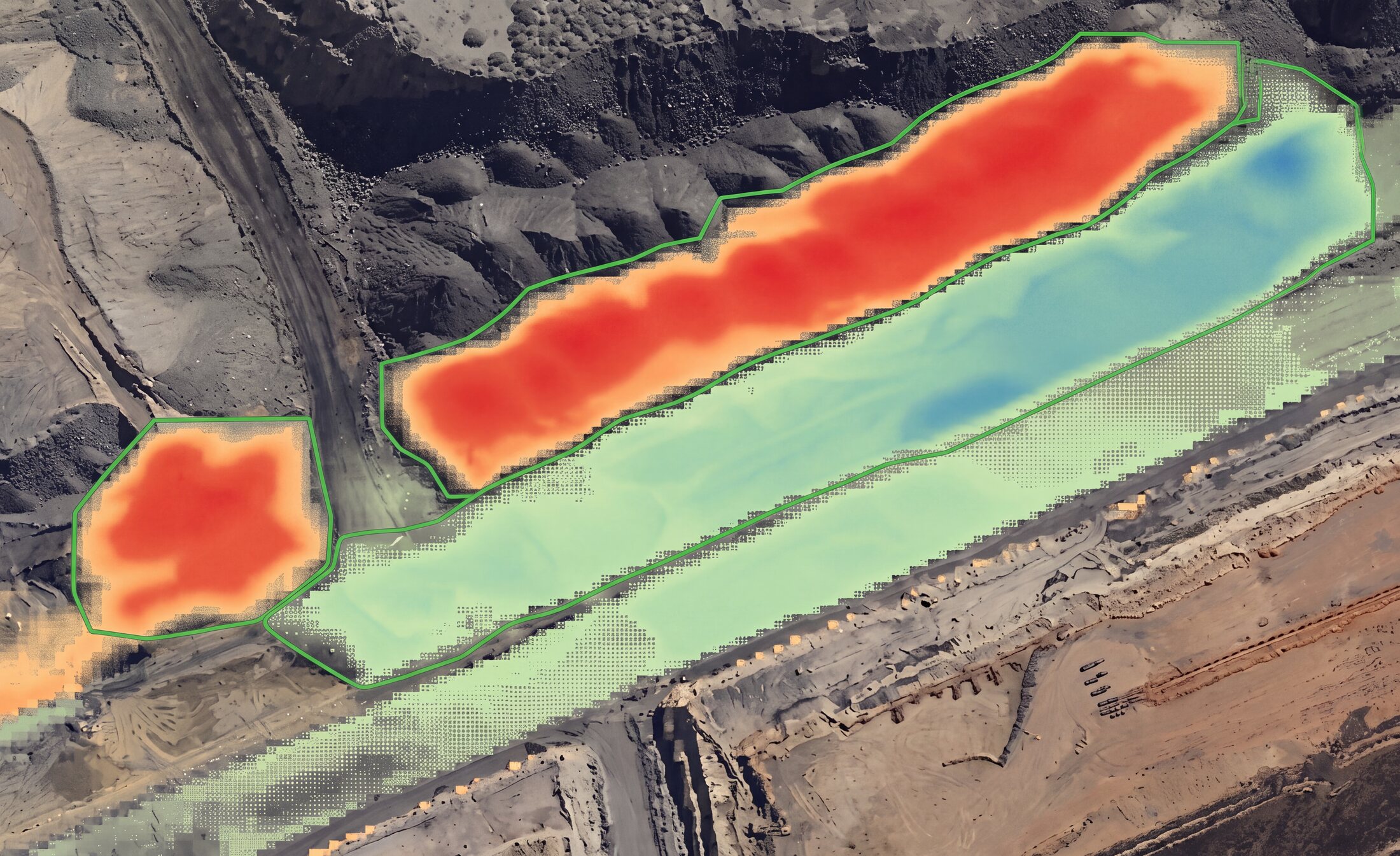
Aerial thermal survey of a discard complex. The heat signatures show the fire below before the surface does. From our 2023/24 Annual Report.
20 years
of measurement between the first emission study and the guidelines mines now run on.
03
The impact
Doctrine instead of folklore
Sponcom management used to be what the old hands remembered. Now it is written down twice, in the 2011 guidelines and the 2025 practical guidelines, and grounded in twenty years of measurement. The thermal mapping finds fires before they break the surface. The antioxidant work points at the suppression chemistry of the next decade. Slow research, patiently funded, ending in a document a mine can be audited against.
2005 to 2008
Measurement
Emissions characterised. The coalfield’s thermal history collated.
2011
First doctrine
Best practice guidelines for prevention and control at surface mines.
2018 to 2021
The modern arc
New methodology. Antioxidants tested as suppressants.
Mar 2025
The guidelines
Practical management guidelines for opencast mines, published.
The evidence. Every claim traces to a published report.
PDFPractical Guidelines for the Management of Spontaneous CombustionWhat this report showsG. Stenzel, M2024: the operational doctrine for opencast mines.2025Open in the Library → PDFPrevention and control of spontaneous combustion, Best Practice GuidelinesWhat this report showsThe first consolidated doctrine for surface coal mines.2011Open in the Library → PDFCharacterisation of Spontaneous Combustion EmissionsWhat this report showsWhat a burning dump actually emits, measured.2005Open in the Library → PDFCollation of Historic Thermal Imagery of the Witbank CoalfieldWhat this report showsThe thermal legacy record.2008Open in the Library → PDFSpontaneous Combustion of Coal and Coal ShalesWhat this report showsThe modern study methodology.2018Open in the Library → Where this goes next
The fire science meets its sister programmes at Kloppersbos, the national explosibility laboratory we helped restore. Related: Continuous Miner Safety. Alternate Uses of Coal.