
We brought a poisoned wetland back to life
The Zaalklapspruit wetland sits downstream of a century of coal mining. We spent eight years fixing it and proving the fix worked.
Acid water does not stop at the fence
Water off old coal workings carries acid and metals into the Olifants river system, and that water feeds Loskop Dam and the farms below it. A healthy wetland filters this naturally. Zaalklapspruit sat in the right place to do that work, and could not. Decades of erosion had cut channels straight through it. The water passed through untouched.
Fix the wetland, then prove the fix
With Working for Wetlands we rebuilt the plumbing, forcing water to spread and slow instead of cutting through. Then came the harder part. Eight years of measurement to show the recovery was real. Groundwater and isotope work traced where the wetland draws its water in the dry season. When engineered erosion barriers proved too expensive, the team tested Dongalock, interlocking shutters cut from recycled PVC, against them, and the cheap local product held its own.
One gap remained. There was no accepted way to score how badly acid water has damaged a wetland, or how far it has recovered. So the team built one, a diatom index, the first of its kind for South African wetlands. Diatoms are microscopic algae that respond fast to water chemistry. Count the right species and the wetland tells you how it is doing.
The site the industry points to
When someone says rehabilitation is a fiction, this is the counterargument with grass on it. A wetland that measurably cleans mine water again, at a fraction of what a treatment plant costs to run forever. The monitoring methods built here now guide wetland offset planning across the coalfields, where 36,500 hectares of offset rehabilitation have been identified. The diatom index gives mines and the regulator one shared measure of recovery. And the water keeps getting cleaner whether anyone is watching or not.
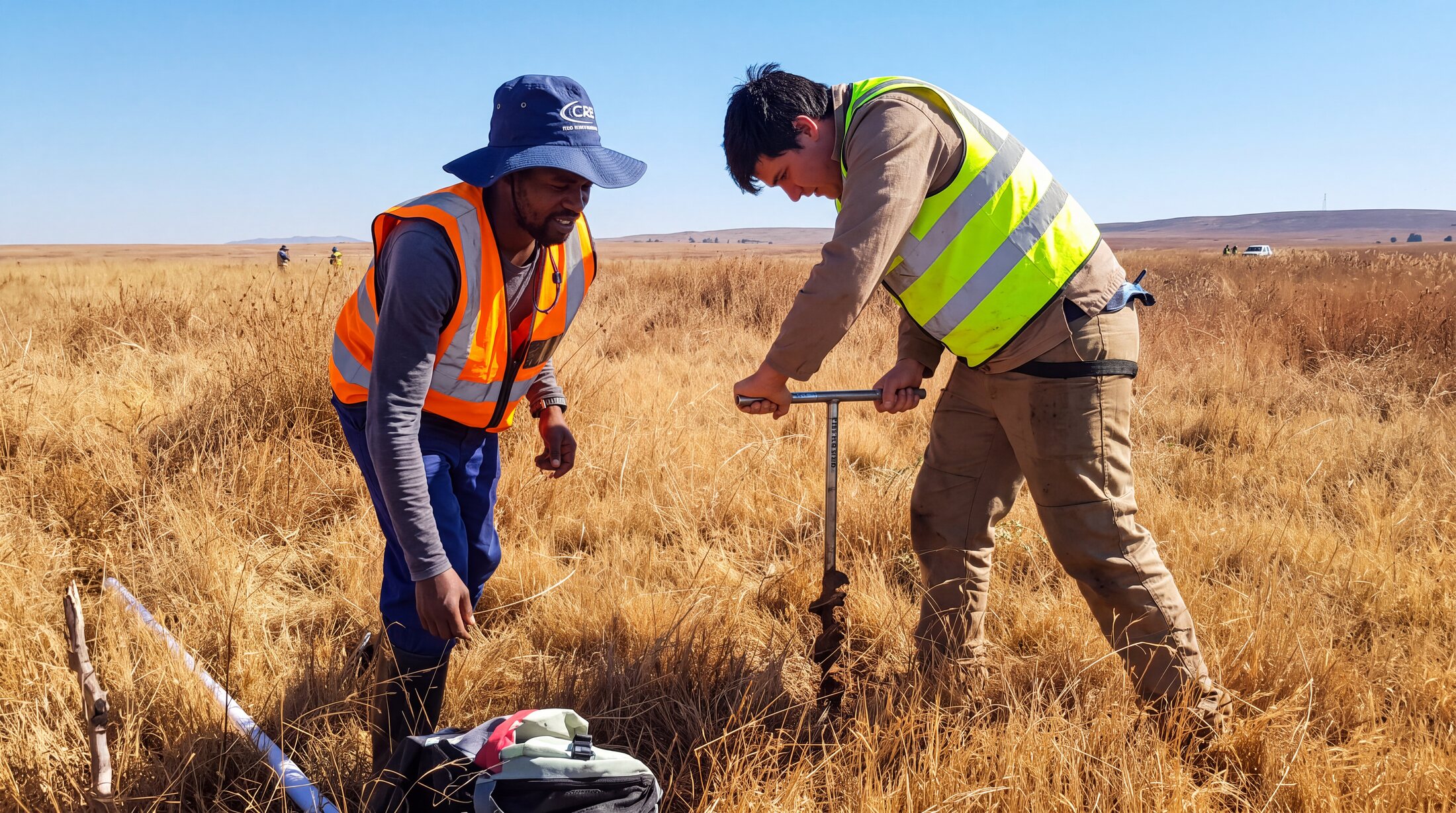
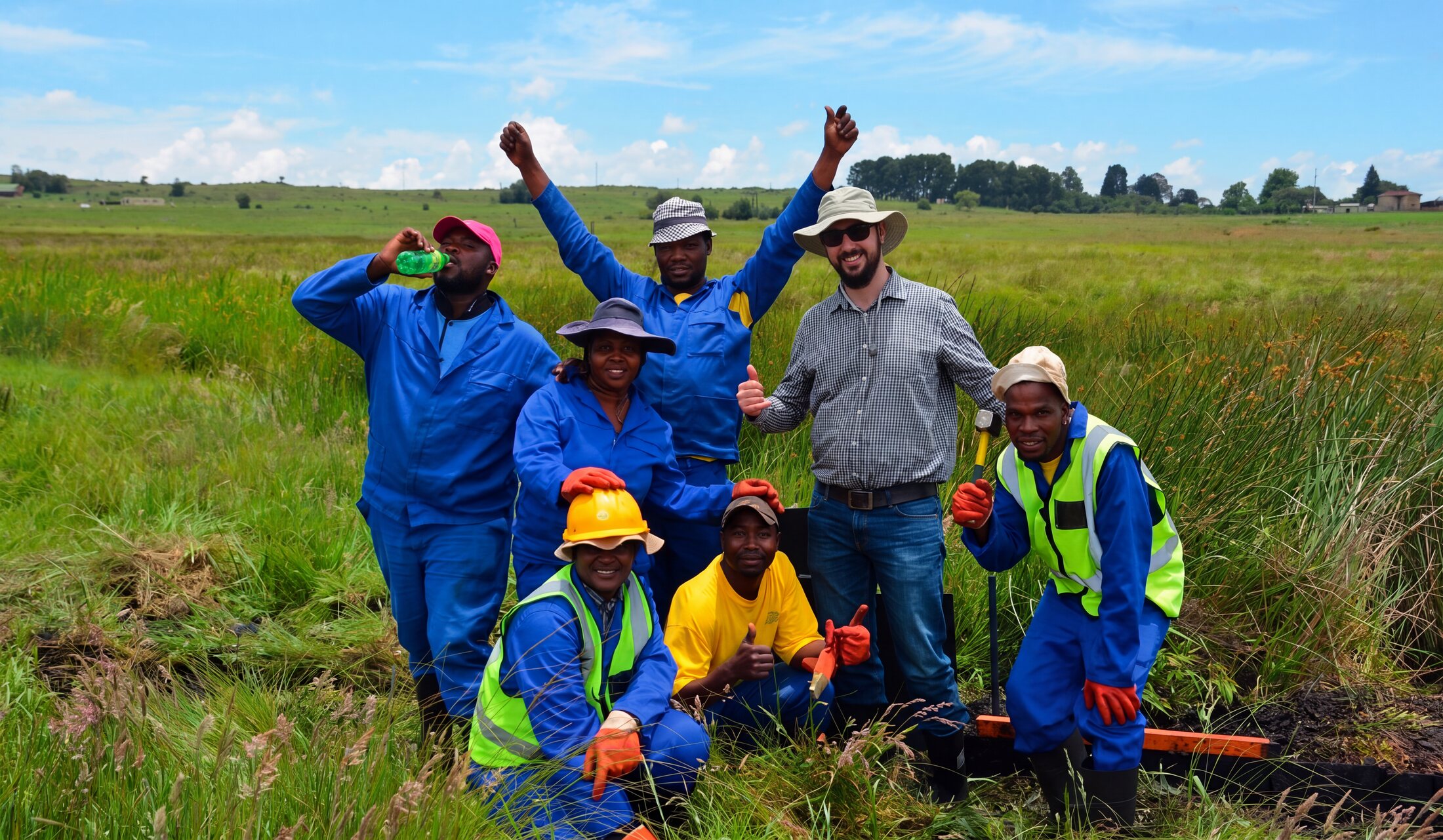
The first wetland anywhere rehabilitated with Dongalock
When the interlocking recycled PVC shutters went into Zaalklapspruit in 2021, it was the first use of the technology in a wetland anywhere in the world. A South African product, tested by South African researchers, proven on a South African coalfield, and reported as a world first by the industry association that championed it.
The evidence. Every claim traces to a published report.
In the news
The 2021 Dongalock installation here was reported as a world first, and the site has since carried into peer reviewed literature and national case studies.
SACESHAWorld first use of Dongalock technology in a wetland29 Mar 2021↗CSIRRehabilitating a wetland in the Zaalklapspruit system impacted by acid mine drainageCase study↗PROCESSES, PEER REVIEWEDAssessing passive treatment pathways of acid mine drainage in an ecologically engineered wetland2025↗WATER RESEARCH COMMISSIONWetland rehabilitation in mining landscapes: an introductory guide2016↗Where this goes next
The wetland work flows into mine closure, where passive treatment carries the argument that land can be handed back. Related: Mine Closure. The Mine Water Portfolio. The Rehabilitation Guideline.